On Friday the U.S. air traffic control system failed, forcing the FAA to shut down all flights for hours. On the same day, SpaceX successfully launched its newest Starship rocket. It was quite the split screen.
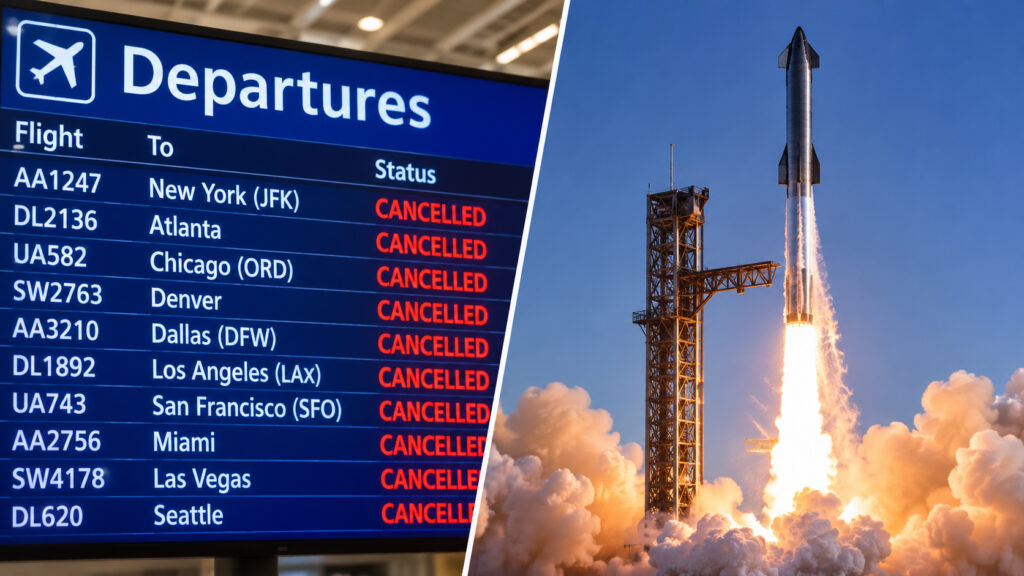
The next day, the air traffic system was still dealing with the backlog that its shutdown caused. SpaceX, for the first time in history, was able to safely land its rocket back on earth.
Details are still coming in, but it seems likely that the air traffic failure was initiated by trying to apply a small upgrade to its decades old communication infrastructure. SpaceX’s success, on the other hand, is rooted in its embrace of the most up-to-date technologies.
SpaceX’s success was also due to its ability to design a system from scratch, versus air traffic control having to evolve, and keep working, over nearly a century (the U.S. Air Commerce Act was passed in 1926).
SpaceX had one additional advantage. It was able to leverage the huge U.S. investment in space technology.
Our air traffic control system has a double disadvantage. Upgrades to it have to be done incrementally and compatibly, with the system continuing to operate and continuing to support older equipment (planes) and locations (airports). And it is run by the U.S. government, which is often essential for getting large projects started (the postal system, internet, the space program itself, the human genome project), but not so good at supporting those systems indefinitely.