The silicon-based integrated circuit, a.k.a. IC or chip, was productized in the early 1960s, giving rise to not just the name of a San Francisco Bay Area valley, but an entire industry.
Like other similar technologies, chip design and manufacturing initially required the resources of large organizations. Today it’s another example of how much easier it has become to turn bits into atoms.
Alan was lucky enough to be present at the inflection point of this particular transition. In the late 1970s, when large companies like Intel were putting the silicon into Silicon Valley with huge production facilities (“fabs“), a couple of researchers were already looking at ways to make chip design and production more practical and efficient.
Carver Mead and Lynn Conway led the development of a set of standardized procedures that would ultimately revolutionize the industry. As part of that development, Conway taught a class at MIT in VLSI (very large scale integration) chip design.
The class not only presented a standardized methodology for computer-based chip design (the bits) but also spurred the creation of a service to turn those designs into physical chips (the atoms). A couple months after the class ended, students could get back copies of the chips they designed.
Alan was able to take the 1983 version of “Introduction to VLSI Systems.” The chip he and his lab partner designed was intended as the key component in an electronic version of the game Mastermind.
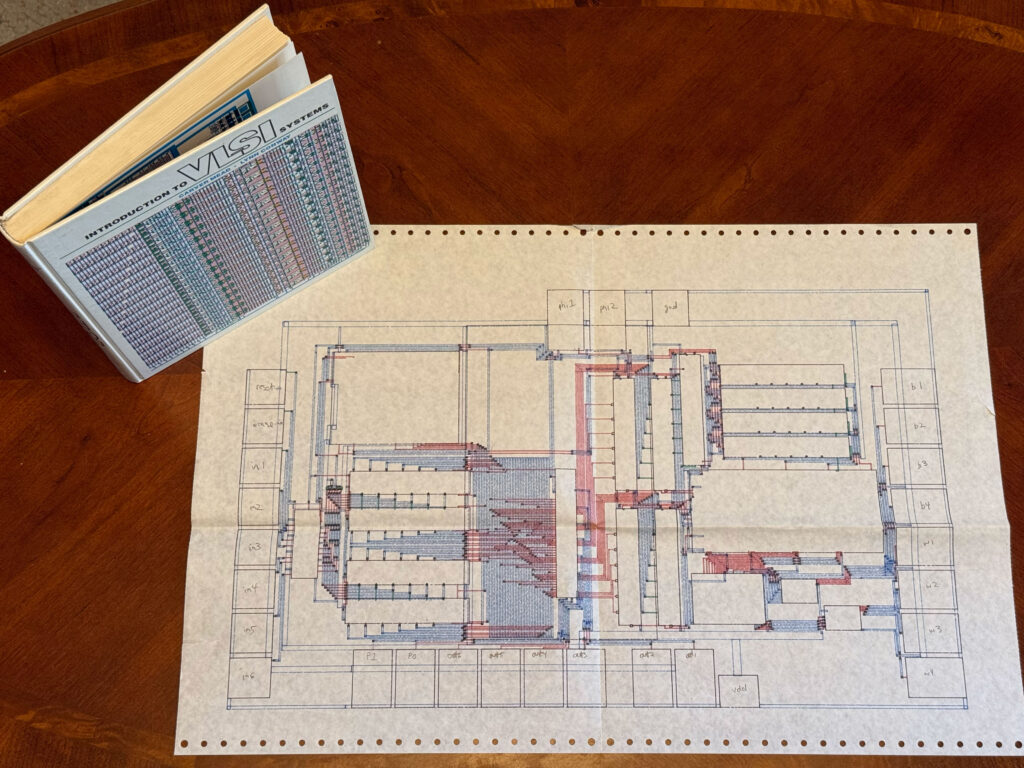
Alan’s chip was never manufactured. But not only did the principles taught in the class transform an entire industry, the manufacturing service pioneered for the class, MOSIS, continues to this day*. It is one of the main ways that the public at large can now turn their own bits into chips.
* Another footnote to history where Xerox fumbled the future.